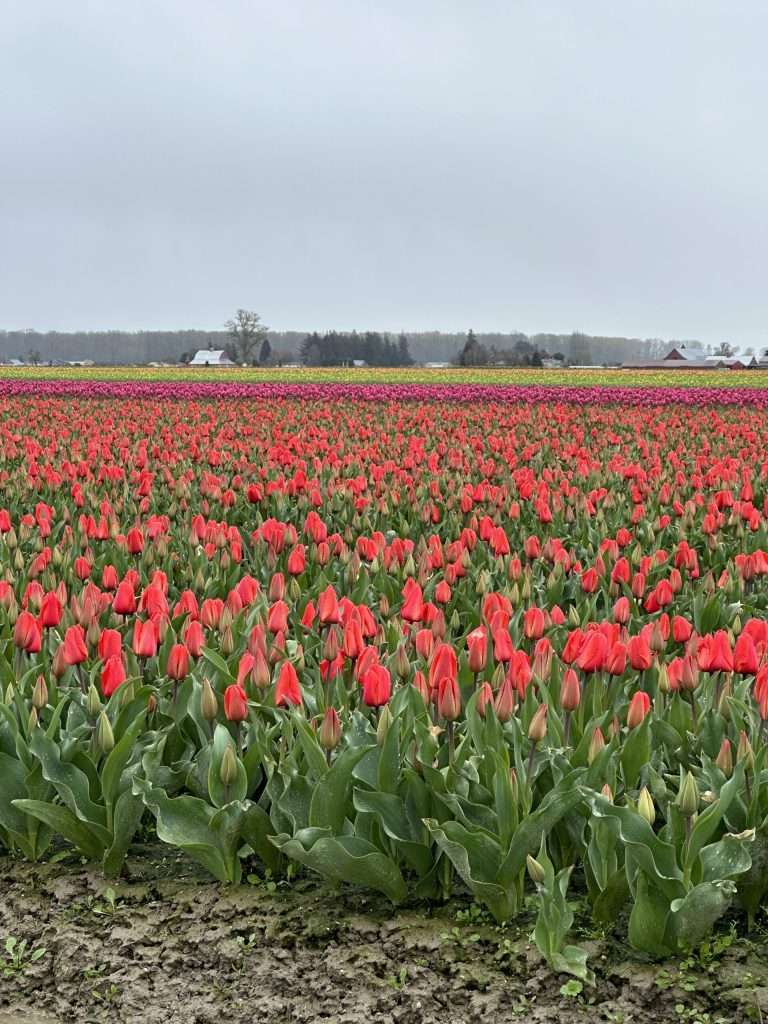

Fall is the perfect time to plant tulip bulbs, giving them the cool rest they need to bloom beautifully in spring. Whether you’re gardening in the Pacific Northwest, the Midwest, or anywhere with a seasonal chill, planting in autumn ensures strong roots and vibrant flowers when the days warm up.
Here in Skagit Valley, home of the Skagit Valley Tulip Festival, our growers are busy planting millions of bulbs that will burst into color next spring, and you can do the same in your own backyard! These tried-and-true tulip planting tips will help you grow healthy, colorful blooms no matter where you live.
Here are our best tulip bulb planting tips!
Choose Quality Bulbs
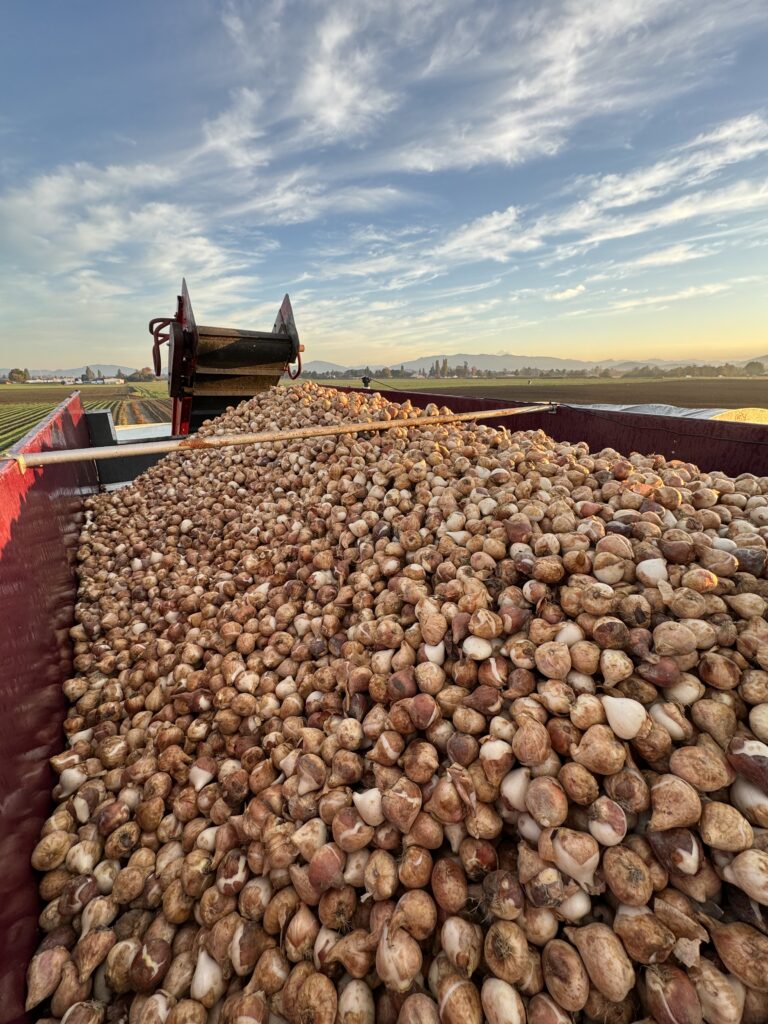
Start with healthy, firm bulbs free of mold or soft spots. Healthy bulbs are packed with energy that turns into strong stems and vibrant blooms come spring. Quality bulbs set the foundation for a truly spectacular spring display.
Find the Perfect Planting Spot
Tulips thrive in full sun and well-drained soil. Choose a location that gets at least six hours of sunlight each day, so your tulips have the energy they need to grow tall and strong. If your soil tends to stay soggy, mix in compost or sand to improve drainage and prevent bulbs from rotting during winter rains.
Timing is Everything
Fall is the ideal season to plant tulip bulbs, after the weather cools but before the ground freezes. In the Skagit Valley, that’s typically from late September through early November. Planting during this window gives bulbs time to establish roots before winter sets in, ensuring a strong, healthy bloom once spring arrives.
Sign Up for Our Newsletter
Sign up for Tulip Festival Insider to get bloom updates, event highlights, insider tips, exclusive offers, and more.

Plant at the Right Depth
Plant your bulbs about 6 to 8 inches deep, with the pointed side facing up. A good rule of thumb is to plant them about three times as deep as the bulb is tall. Space them a few inches apart so they have room to grow and spread. Cover them gently with soil and water them once to help them settle in for their long winter nap.
Keep the Critters Away
Squirrels and deer all love tulip bulbs, and they can dig up your hard work in a heartbeat! To protect your bulbs, lay chicken wire or mesh over the soil until it freezes, or sprinkle a little cayenne pepper as a natural deterrent. You can also surround your tulip bed with daffodils or alliums, which critters tend to avoid.
Don’t Worry About the Cold
Once the ground freezes, your tulips are right where they should be. In fact, tulips need the winter chill to trigger their spring growth. Under the surface, the bulbs will be busy developing roots and preparing to bloom when the days grow longer. Trust the process, your patience will pay off in a burst of color when spring arrives!
Bring a Bit of Skagit Home
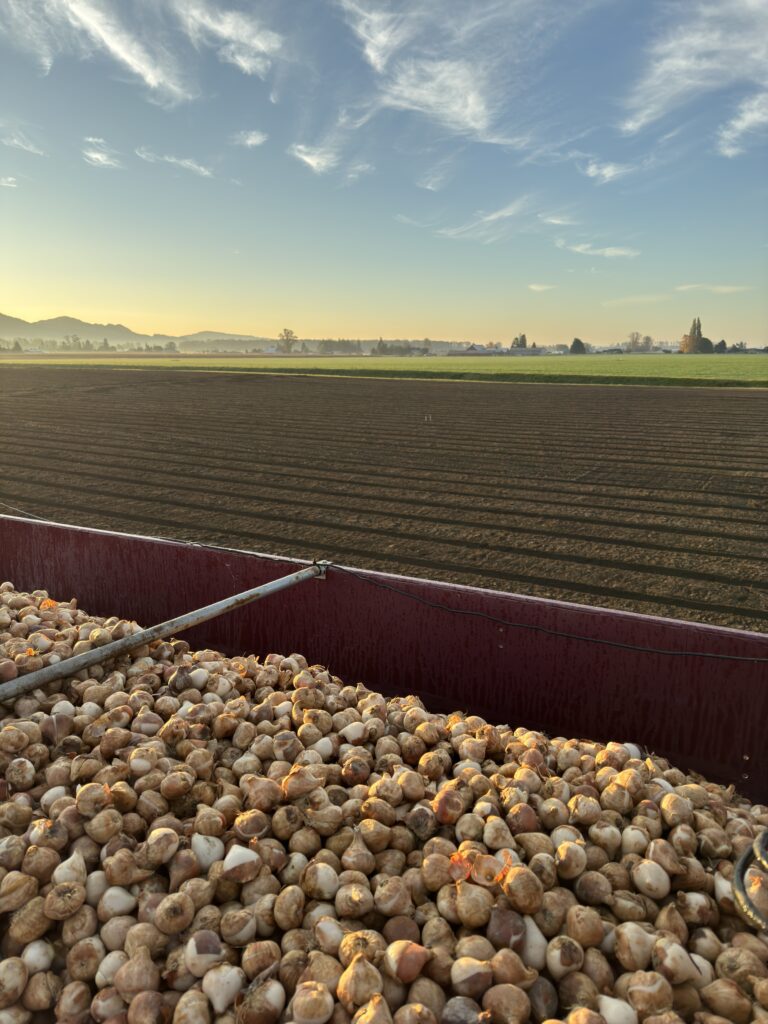
Each spring, our valley bursts into color with millions of tulips and it all starts with a few bulbs planted in fall. Whether you’re filling a garden bed or a single planter box, a little effort now means a big reward when the first blooms appear.
Follow us on Instagram and Facebook this season for behind-the-scenes planting moments from our growers and inspiration for your own tulip garden!