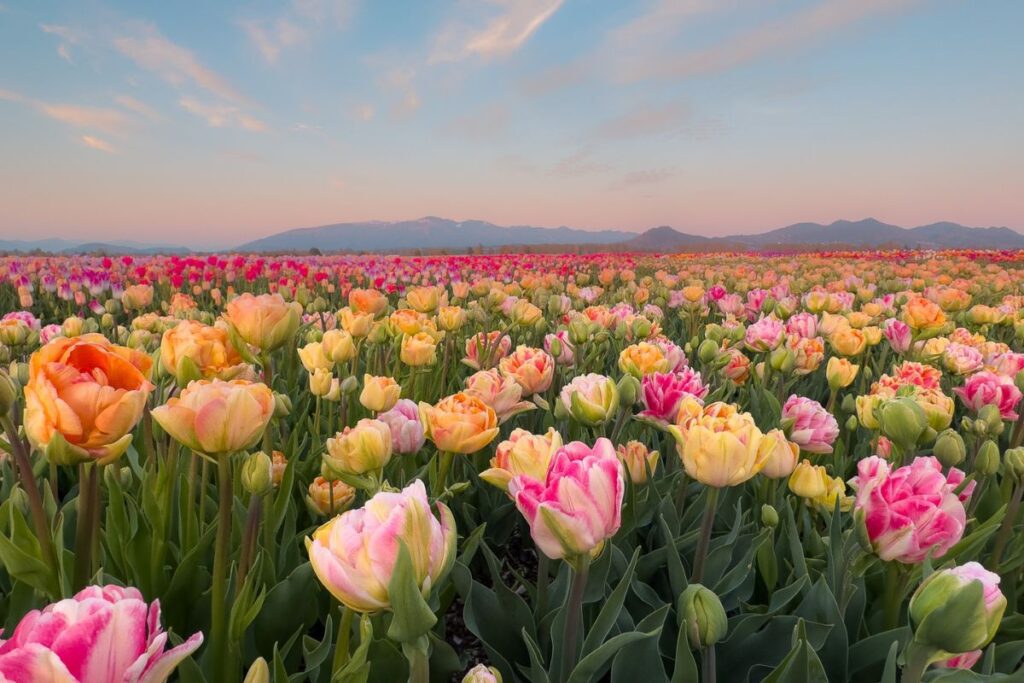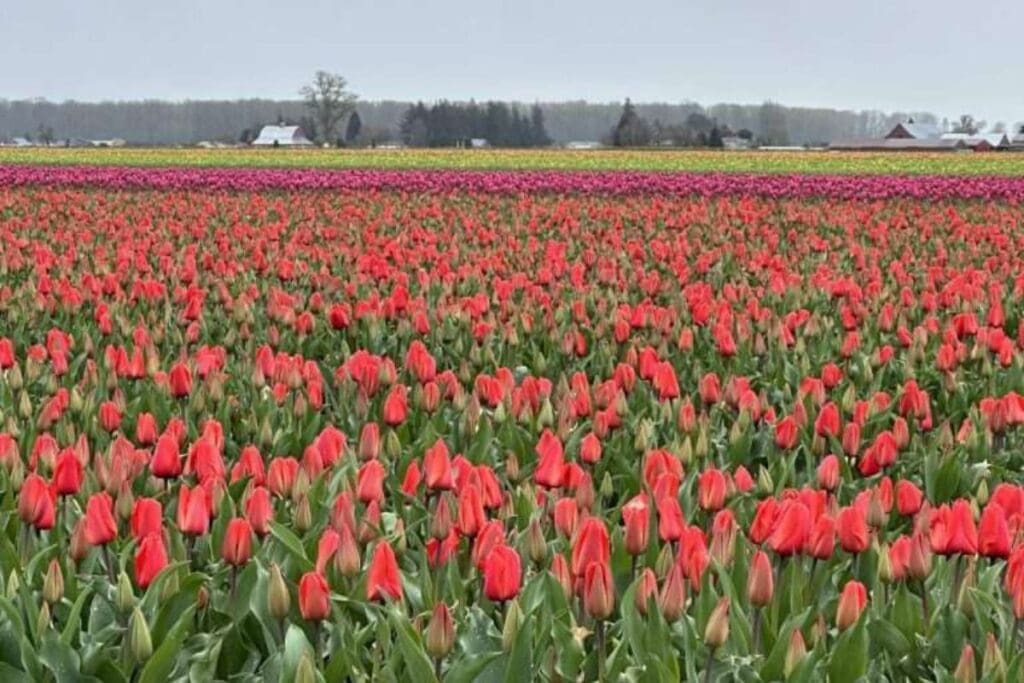
Springtime in Skagit Valley has long been a favorite escape for Canadian travelers. That’s especially true when you’re looking to welcome the season with color, fresh air and small-town charm.
Located just south of the British Columbia border, the Skagit Valley Tulip Festival offers an easy international getaway. You’ll find millions of vibrant blooms, stunning family-owned farms and unforgettable scenery.
With close cross-border access and a rich shared tulip history, Skagit Valley feels both familiar and refreshingly new.
We designed this Canadian visitor’s guide specifically for our northern guests. It covers everything you need to plan your visit, from tickets and travel routes to border tips and trip-planning resources.
Buy your tulip garden tickets early to see the blooms in person.
A Shared Tulip Legacy: Canada & Skagit Valley
Tulips hold a special place in the hearts of both Canadians and the Skagit Valley farming community. After World War II, the Netherlands gifted tulip bulbs to Canada as a symbol of gratitude and friendship. This gift created a legacy that cemented tulips as a powerful symbol of renewal, hope and international connection across North America.
That legacy continued westward as Dutch immigrants brought their agricultural knowledge to the Pacific Northwest. Here, Skagit Valley’s fertile soil proved ideal for tulip farming.
Today, tulips remain deeply meaningful on both sides of the border. We celebrate them through spring festivals that honor agriculture, family farming and the joy of welcoming a new season.
How Skagit Valley Differs From Other Flower Festivals
Most flower festivals take place in one park or botanical garden; the Skagit Valley Tulip Festival spans an agricultural valley. You can explore expansive fields across multiple farms, holding millions of blooms and unique tulip varieties.
Beyond the flowers, the festival offers something for every type of traveler. You can customize your experience in many ways:
- Visiting multiple gardens
- Attending local events
- Enjoying farm-to-table dining
- Exploring small towns set against mountain ranges, waterways and nearby national parks
For Canadian visitors, it’s the closest way to enjoy an Amsterdam-like tulip experience without the long overseas flight.
International Ticketing and Payment Tips
Each official Skagit Valley Tulip Festival garden sells tickets separately. This allows you to choose the gardens and experiences that best fit your itinerary.
We highly recommend buying tickets online (and early) because it helps you spend less time in line at the gate, especially during peak bloom season.
Ticket prices are in U.S. dollars, and most locations accept major Canadian credit cards. Check whether your credit card charges foreign transaction fees to avoid extra costs on your spring getaway.
If you’re planning a multi-day trip, we encourage you to book midweek stays. You’ll encounter fewer crowds, get better lodging availability and enjoy a more relaxed atmosphere.
Discover curated places to stay in Skagit County.
Crossing the Border: 4 Travel Routes From British Columbia
Skagit Valley is located just south of the Canadian border, making it a highly accessible international spring destination for British Columbia residents.
The tulip gardens and fields are spread across Mount Vernon, while a variety of springtime community events happen throughout Skagit County.
You can choose from multiple travel options depending on your preference and trip length. These include driving, train travel, air travel or ferry routes that combine coastal scenery with tulip season.
1. Travel by Car
Driving is the most popular option for Canadian visitors. It offers maximum flexibility to explore multiple gardens, towns and attractions at your own pace.
Common border crossings include Peace Arch, Pacific Highway and Sumas, all providing direct routes into Skagit Valley. Parking is free at all four tulip gardens and is available throughout the neighboring towns. Scenic drives through farmland and mountain backdrops are part of the experience.
A car helps you easily pair tulip garden visits with dining, shopping and nearby outdoor recreation. Keep your camera ready for the beautiful mountain views along the way.
Tip. If you have a NEXUS card, it can be a real lifesaver on busy weekends. When you take a car, consider a scenic Skagit Valley drive.
2. Travel by Train
Amtrak Cascades offers rail service between British Columbia and Washington State. As a result, train travel is a relaxed and scenic option.
Traveling by train is a great choice when you prefer not to drive long distances. It’s also ideal when you want to enjoy the coastal and farmland views along the way.
Once in Washington, you may need a rental car, rideshare or local transportation to reach the tulip gardens. Border officers will complete inspections onboard the train, but you still need valid travel documents.
Spring schedules fill quickly, so book your tickets in advance.
Tip. Arrive at Vancouver’s Pacific Central Station at least 60 minutes early to breeze through the border pre-clearance.
3. Travel by Sea
Ferry routes connecting British Columbia and Washington provide a unique and scenic way to travel. When you want to combine coastal exploration with tulip season, a ferry is a perfect fit.
Taking a ferry also adds an extra layer of adventure to your journey and pairs well with island or waterfront stops.
Border officers will complete entry checks onboard the ferry, so plan extra travel time and keep your documents ready. Ferry routes often require more advance planning, especially during busy spring weekends.
Tip. The Sidney-to-Anacortes ferry is currently suspended. Treat yourself to the scenic route: Hop onto Chuckanut Drive (SR 11) for cliffside views of the San Juan Islands once south of Bellingham.
4. Travel by Air
Several airports on both sides of the border provide access to Skagit Valley. Sea-Tac International Airport serves as the primary U.S. option.
Flying is ideal when you’re planning a longer stay or combining tulip season with additional U.S. travel.
We recommend renting a car once you arrive. Tulip gardens and festival experiences occur throughout the valley and surrounding towns.
Tip. Flying into Bellingham (BLI) bypasses heavy Seattle traffic for a much faster arrival. Paine Field (PAE) is another low-stress alternative only 45 minutes south of the valley.
Border-Crossing Tips for Canadian Visitors
Border wait times can vary during tulip season, especially on spring weekends.
Popular points of entry may experience longer delays. As a result, we strongly recommend checking real-time wait times through the CBP or CBSA websites pre-departure. The CBP mobile app is very handy.
Plan for extra travel time during peak hours to help reduce stress.
Ensure all travel documents are current and readily accessible. Be prepared to answer standard questions about your travel plans and purpose of visit. Declare all agricultural products (including fruits, meats and plants) because many items are prohibited. Undeclared goods can result in fines.
Visitors traveling with pets should review U.S. entry requirements in advance. Remember that dogs must be at least 6 months old and have an ISO-compliant (15-digit) microchip to enter the U.S. You must also complete the free CDC Dog Import Form online and present the receipt at the border.
Confirm duty-free allowances before crossing.
Explore our interactive map and visitor’s guide to learn more about getting around Skagit Valley.
Beyond the Blooms: Experience the Best of Skagit Valley
Tulips are the stars of the season, but Skagit Valley offers much more for international visitors. Many factors make our region ideal for overnight and multi-day stays:
- Charming downtowns
- Scenic landscapes
- Locally owned shops
- Strong sense of community
- Warm hospitality
We encourage our Canadian travelers to book lodging early or plan a midweek visit. You’ll get the best availability, see fewer crowds and have a more immersive experience.
Top Places To Stay for International Guests
Skagit Valley offers a variety of accommodations ideal for international travelers, including comfortable hotels, boutique inns and unique glamping experiences.
Many visitors choose to stay in nearby coastal towns like Anacortes or in welcoming communities like La Conner. There, lodging options are conveniently located within walkable downtown areas filled with shops, dining and waterfront views.
In Anacortes, the historic Majestic Inn & Spa offers elegant accommodations just a short drive from the tulip gardens. In La Conner, the La Conner Channel Lodge provides a relaxed, waterfront setting that pairs perfectly with tulip season. Both towns are perfect spots for exploring the festival and surrounding Skagit Valley.
Whether you’re looking for a cozy retreat or a central home base, we have lodging options to match every travel style.
Where To Experience Regional Cuisine
The Skagit Valley food scene reflects our deep agricultural roots, with farm-to-table dining, fresh local ingredients and seasonal menus.
You can enjoy everything from casual cafés to waterfront dining, craft breweries and beloved local gathering spots. These include Shawn O’Donnell’s, an Irish restaurant known for its cozy pub atmosphere and classic comfort fare.
Many eateries partner directly with local farmers, offering a true taste of the region and a meaningful connection to the land that makes tulip season possible.
Places like the Skagit Valley Food Co-op showcase the community’s commitment to locally sourced foods and sustainable practices. You can easily experience Skagit Valley’s agricultural spirit beyond the tulip gardens and fields.
Where To Shop for Local Souvenirs
Downtown shopping districts throughout Skagit Valley feature locally made goods, artisan products and handmade gifts. Their makers take inspiration from the tulips, agriculture and Pacific Northwest spirit.
Skagit is home to mom-and-pop shops and seasonal favorites like the PNW Artisan Marketplace, which brings together a curated mix of regional makers under one roof. Each offers wonderful opportunities to support small businesses and local artists.
Be sure to stop by Skagit Valley Tulip Festival Headquarters for official festival merchandise, a perfect keepsake from your visit.
Events and Attractions for International Visitors
Tulip season happens alongside a variety of local events, markets, art exhibits and seasonal attractions. All invite you to celebrate with our community as one.
From live music to waterfront strolls and heritage attractions, something exciting is always on the calendar.
We encourage Canadian visitors to check the Skagit Valley Tulip Festival event calendar when planning your trip. That way, you can align your visit with special, once-in-a-lifetime experiences.
A Shared Spring Tradition Across the Border
A visit to Skagit Valley is the perfect way to celebrate the beauty and energy of spring. You can reconnect with nature and experience a shared tulip heritage just south of the border.
With easy access from British Columbia, our welcoming communities invite you to slow down. You’ll leave with colorful memories of vibrant fields and charming waterfront towns.
Skagit Valley provides a refreshingly local perspective on an international spring tradition.
Purchase Tickets and Start Planning Your Skagit Valley Tulip Festival Getaway
Start your journey today by exploring our Plan Your Trip page, complete with links to festival resources, events and guides. Check the official Bloom Status to stay current on tulip conditions.
Buy your tulip garden tickets to secure your ideal dates. We look forward to seeing our Canadian neighbors in the fields this April!
Sign up for our newsletter to receive the latest Skagit Valley goings-on right in your inbox.